The Global Humanity for Peace Institute was launched on 18th November 2021 at the University of Wales Trinity St David to coincide with its annual Founders Day event.
The GHfP Institute carries forward a number of major international research programmes previously developed at the Guerrand-Hermès Foundation for Peace and is embedded in an excellent research and teaching environment and learning community of the UWTSD. The Institute seeks to engage in cutting-edge research aimed at new understanding, innovation, policy change, and social transformation. It will offer masters and doctoral courses and professional programmes in collective healing, public health and well-being, social justice, deep dialogue, positive peace, human-centred education, and community regeneration.
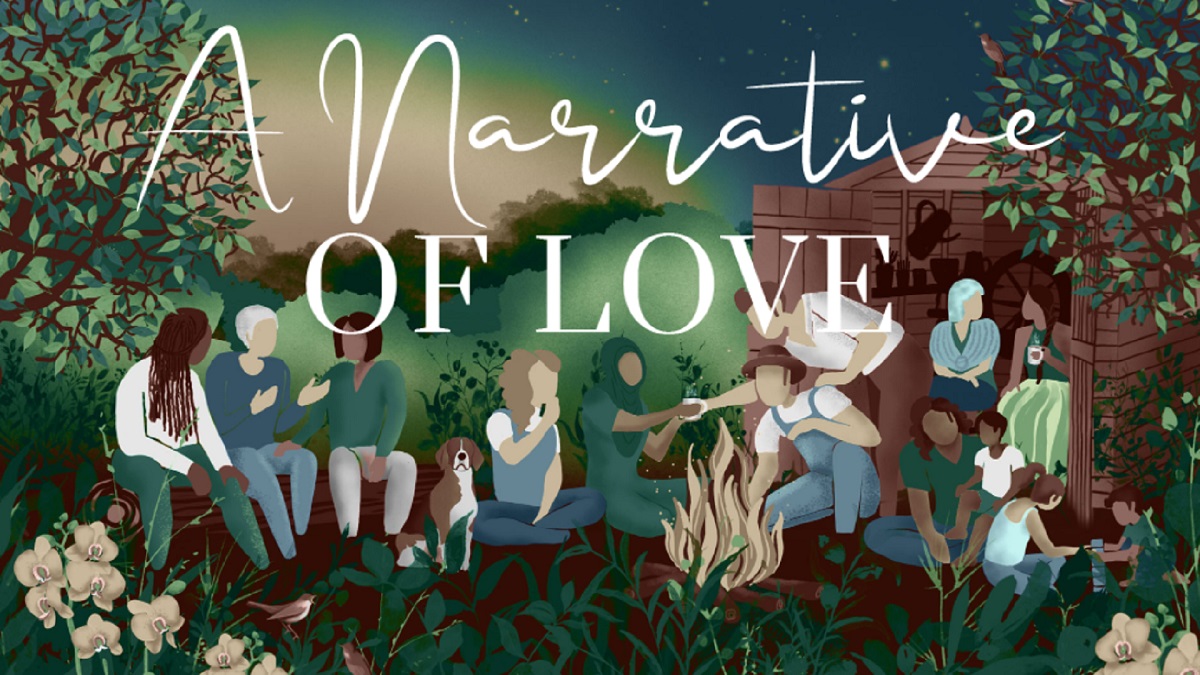
In this Project, we are exploring the ways in which Love has been expressed in the great philosophical and wisdom traditions.
This research seeks to provide a foundation for taking Love seriously by acknowledging that Love is the energising force that animates all goodness and shapes all that is.
The G20 Interfaith Forum (IF20) offers an annual platform where a network of religiously linked institutions and initiatives engage on global agendas (primarily on and including the Sustainable Development Goals or SDGs). Operating by analogy to formal G20 engagement groups, the IF20 is linked informally to the full G20 process.
The annual G20 Leader Summits provide a critical time and place where priority global issues are considered. The formal G20 process has evolved since it was established in 1999 and took on its current form after the economic crisis of 2008, with various platforms (ministerial meetings, engagement groups) that allow different sectors and communities to present ideas and recommendations to global leaders. The IF20 provides an important context for religious voices to contribute meaningful insight and recommendations that respond to and help shape the overall G20 and thus global policy agendas.
The IF20 processes include various platforms (ministerial meetings, engagement groups) that allow different sectors and communities to present ideas and recommendations to global leaders. IF20 aims to contribute meaningful insight and recommendations that respond to and help shape the G20 and thus global policy agendas.
The IF20 builds on the vital roles that religious institutions and faiths play in world affairs, reflecting their rich diversity of institutions, ideas, and values. These include interfaith and intercultural organisations, religious leaders, scholars, development and humanitarian entities, and business and civil society actors.
The GHFP has sponsored the work of the IF20 Education Working Group.
In 2020, the GHFP supported the IF20 Education Working Group’s research, resulting in the Policy Brief on Inclusive and Caring Education.
In 2021, the GHFP directed, and co-sponsored a Global Listening Initiative to (1) ground policy inquiry in existing global proposals, and (2) understand the lived experiences of children and young people in diverse contexts and engage them in identifying actions for educational transformation.
The ‘Global Listening Initiative’ led to further dialogic events
Youths Dialogue with Politician at Spirit of Humanity Forum June 2021
G20 Interfaith Forum Ministerial Session
High-Level Dialogue with Global Leaders on Educational Transformation, October 2021
Presenting Policy Brief at G20 Global Leaders’ Forum, 2021
In 2022, during the IF20 Summit held in Dec in Abu Dhabi, Prof Scherto Gill facilitated a breakout session on education and the role of interfaith communities in understanding children’s learning needs and supporting public education. GHFP’s trustee, Prof Patrice Brodeur was a speaker on the this panel and he stressed the importance of integrating dialogue as both an educative process and a learners’ competence in education.
By drawing the insights from this panel discussion during IF20 2022, the GHFP has developed a policy brief on ethical education. The actionable recommendations highlight the importance of consolidating a public education ecosystem, involving multiple stakeholders, and engaging families, interfaith communities, local and international NGOs, and governments in nurturing children’s holistic well-being, enriching ethics education and strengthening teachers professional development.
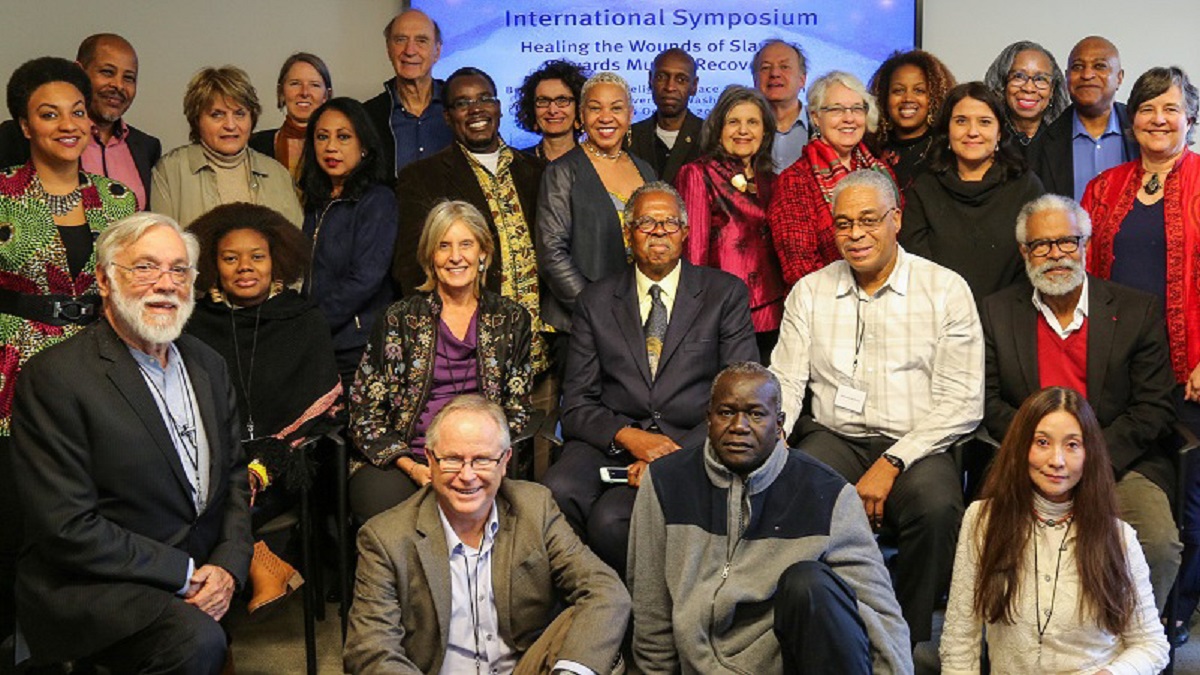
Under the leadership of UNESCO’s Slave Routes Project, GHFP, working with Georgetown University launched a research project which aimed to map out the diverse conceptions and methodologies of healing (mass trauma such as genocide and slavery). This research locates the inquiry around the contextualised question: “What might constitute healing (in the context of the wounds of trans-Atlantic slave trade and slavery)?”
This commitment highlighted the necessity for such an inquiry especially given the kinds of harm and woundedness that need to be attended and addressed through healing processes. It argued why a mapping research should be designed as a mixed-methods investigation, and outlines the details of the intended research processes.
Healing the Wounds of Slavery was aimed at healing and addressing the wounds and psycho-social, economic and political consequences of the trans-Atlantic slave trade and slave history. The hope is to create pathways towards personal, cultural, relational and institutional transformation.
The Spirit of Humanity Forum is a global network of organizations, communities and individuals committed to help bring about change in governance and decision-making, based on core human values. The Forum creates a safe space for deeper encounter, exploration and dialogue among leaders to discover new ways to move forwards.
The Spirit of Humanity Forum brings together leaders and practitioners who hold the view that the positive energy of love is the deepest, most enduring and most valuable characteristic of human nature. The aim of the Forum is to identify and share ways of improving access to this inner strength of being. It showcases practical examples of how love, compassion and a care for others can transform and truly re-humanise an organization.
Healing the Wounds of History recognized the importance of psycho-social approaches to healing through self-awareness, understanding, forgiveness and transformation and integrated these well-researched methodologies in training of professionals, and of teachers. conferences and other events were held.
Healing the Wounds of History programmes are essentially experiential journeys through which people become more aware that unresolved past wounds can continue to drive us to violence. These are often well-established but innovative approaches to healing, including the use of drama, storytelling, constellation work, deep spiritual reflection, expressive arts and so forth.
The HWH programme was developed to help heal the deeper roots of violence. The causes of violence are often located in recent but also older and even ancient historical grievances, memories and traumas. These psychological roots, when drawing on perceived injustices, can become sources of violence, especially in acute times of crisis, fear and threat. These driving forces usually remain un-examined. By unfolding and deconstructing them, individuals can begin to understand where many prejudices and impulses for violence against the other are held and thereby take the opportunity to release them through forgiveness and compassion.
The HWH training was concerned with unearthing these deeply rooted identities so that we can begin to reframe/rethink the “self”, humanise the other and improve relationships. To develop capacities at the individual level, helps collective action and peace‐building efforts at the group level. This important work then supports political, social, economic, and civil endeavours.
You must be logged in to post a comment.